A lot of people build their business the same way they build their content. They copy the loudest person in the room, all the way down to the aesthetic.
And then wonder why nothing works.
The business we built to $40k/month didn’t come from reinventing anything new. It came from getting more honest about what we were actually good at: YouTube strategy, retention, packaging, basically turning scattered creative into systems that actually produce results.
Your business gets stronger when your positioning gets more honest.
I want to show you exactly how we applied that thinking to help creator Gabe Bult reach a six-figure launch with his cohort.
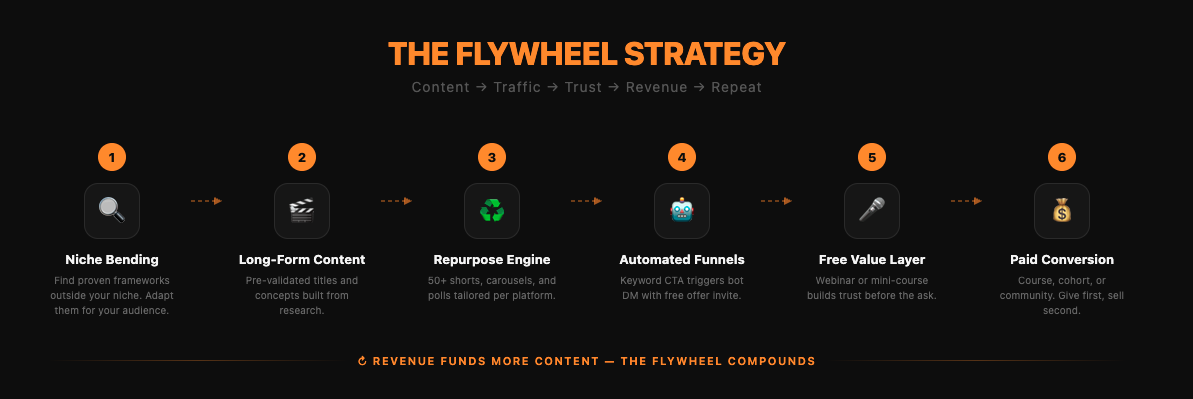
We call it The Flywheel Strategy.
Let me break it down.
Part 1 - The Niche Bending Method
Gabe had a course teaching people how to become YouTubers and earn money through YouTube. He needed marketing that could generate traffic and funnel it back to his cohort.
The first move wasn’t “make more content.”
It was research.
We used a strategy called niche bending: taking a proven idea from outside your niche and adapting it for your audience.
Here’s what that looked like.
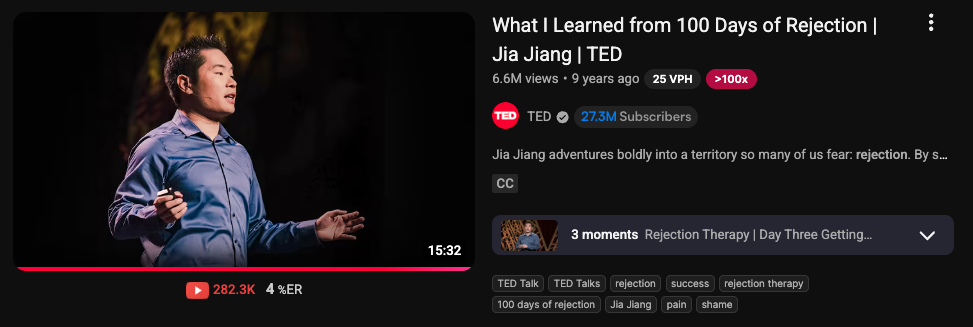
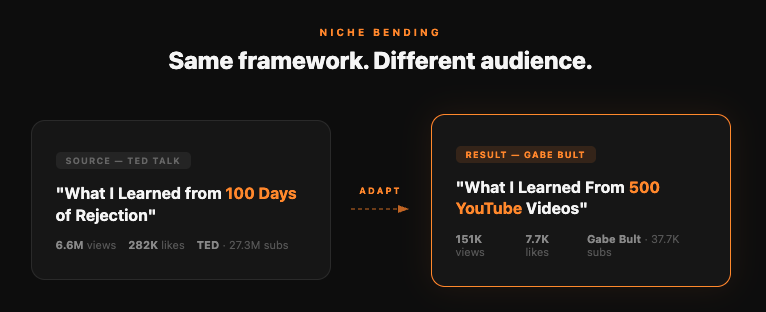
We found a TED Talk titled “What I Learned From 100 Days of Rejection” with 6.6 million views. Nothing fancy, just a compelling framework. We took that title structure and rebuilt it for Gabe’s niche: YouTube growth and monetization.
Same emotional hook. Different audience.
Original:
Our niche-bending angle:
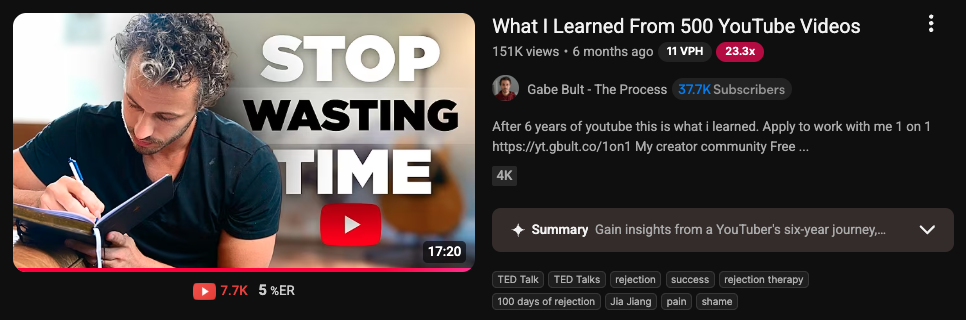
The result?
A video framework that was pre-validated by millions of views, repackaged for an audience that had never seen it.
This is the first piece of the flywheel. You’re not guessing what works. You’re adapting what’s already proven.
Part 2 - The Repurposing Engine
Once we had winning long-form concepts, we didn’t stop there. We built a full repurposing engine.
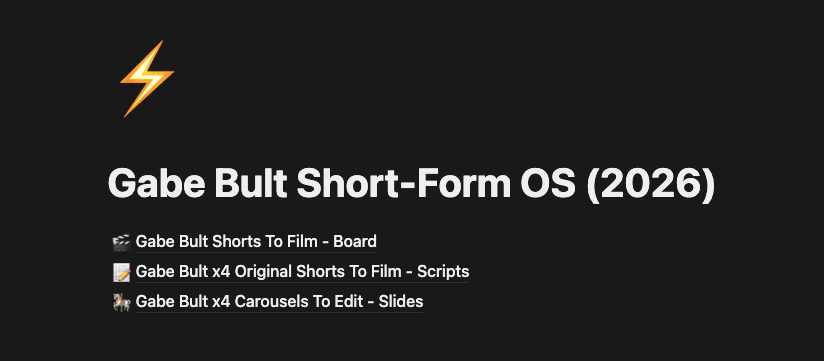
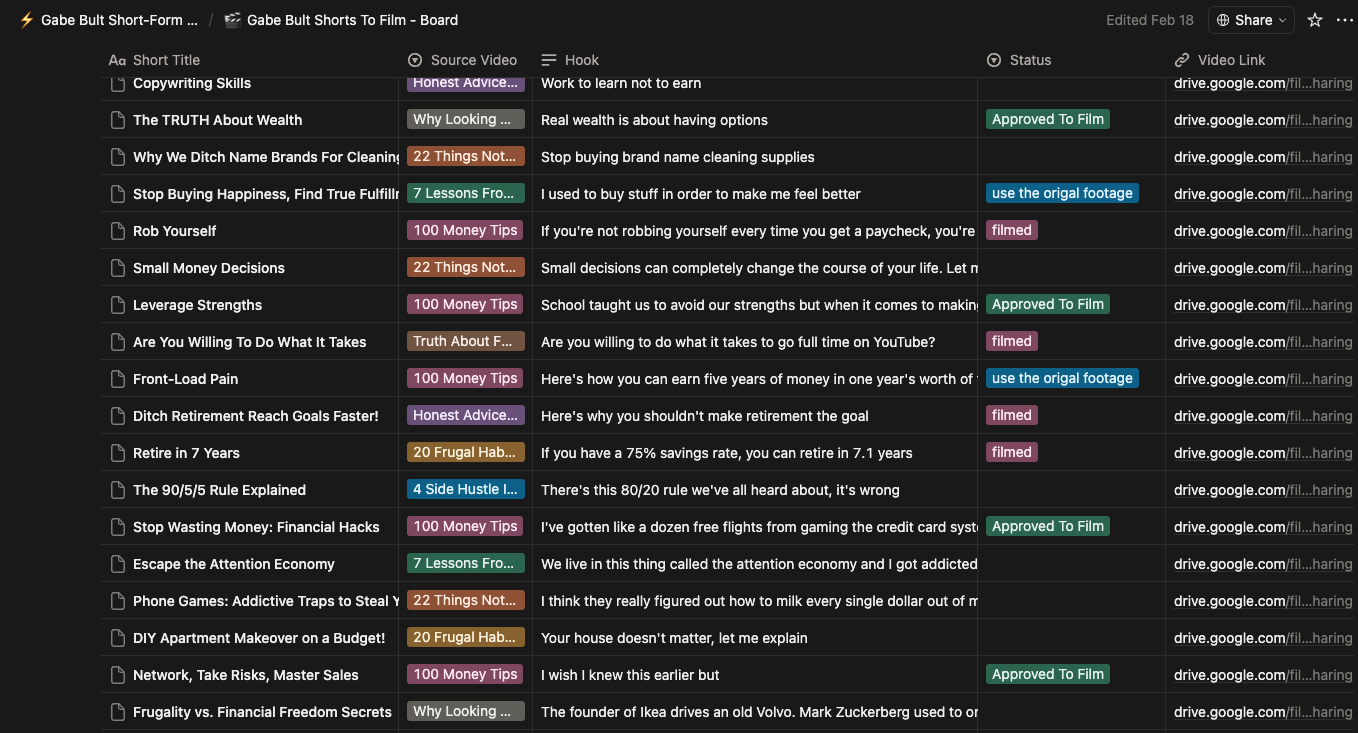
Short-form: We took Gabe’s best-performing ideas and repurposed them into 50+ short-form concepts tailored to each platform’s ICP pain points. We also developed original shorts based on trending concepts in adjacent niches.
Everything was documented in a Notion board. Gabe approved ideas, filmed them and sent raw files to our editing team. Clean operation, zero guesswork.
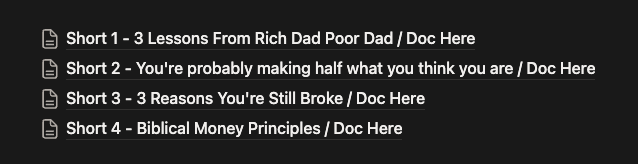
Now let’s talk about carousels that convert.
This is where it gets good.
Every carousel followed the same architecture:
- Hook slide: a stat or claim that stops the scroll, like “79% of millionaires didn’t inherit their wealth”
- Value slides: real case studies, actionable tips and frameworks
- CTA slide: comment a keyword to get something free
For example: “Comment MINI and I’ll send you an invite.”
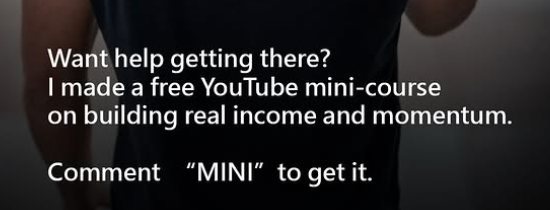
Everyone spams the keyword. An automation bot DMs each person with an invite to a free mini-course or upcoming webinar. That webinar delivers massive free value and at the end Gabe pitches the paid cohort.
Free value -> trust -> paid conversion. Every single time.
We ran this same play across Instagram, Facebook and YouTube Community posts. The only thing that changed was the CTA format on YouTube. We linked in comments instead of DMs since you can’t DM on the platform.
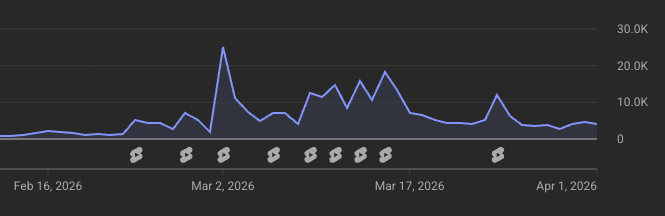
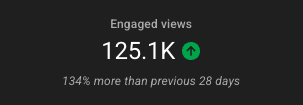
Everything stayed in rotation to keep the audience warm. We typically recommend starting this engine 1-2 months before launch. By the time the webinar goes live, you’ve already built the traffic. You’re not launching cold.

Part 3 - Systems Over Skill
Skill gets you in the room. Systems let you stay there.
A lot of people can give good advice. Fewer can turn that advice into a repeatable machine.
That’s where the flywheel earns its name. It’s not one viral post. It’s the compounding effect of niche-bent long-form -> repurposed shorts -> value carousels -> automated funnels -> free offer -> paid conversion all spinning together.
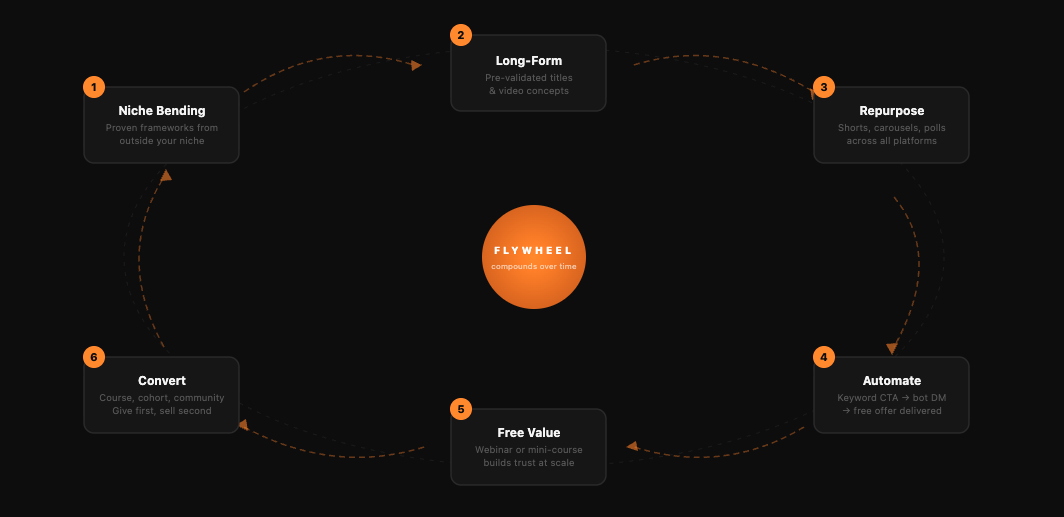
We used AI and automation where they actually helped: research, faster iteration, less manual drag. Not outsourcing taste.
The better use of tools is the opposite of what most people do.
Get good enough to know what good looks like. Then use tools to remove friction around your actual thinking.
When your offer, delivery and voice all sound like they came from the same brain, people feel it.
The positioning feels cleaner. The sales conversations get easier. The right clients show up with less confusion.
If you want to see more breakdowns like this, the tools I’m using and the behind-the-scenes of how we build these systems, I share a lot of it on LinkedIn. Come say what’s up.